- What the Names Mean
- Choosing a Depth
- The Shelf Can Serve as Your Entry
- Where the Return Inlets Go
- Finishes That Grip Without Abrading
- Features Worth Building In
- The Tradeoffs
- Adding a Shelf to an Existing Concrete Pool
- Frequently Asked Questions
- Start Planning Your Custom Backyard With M&M Pool Builders
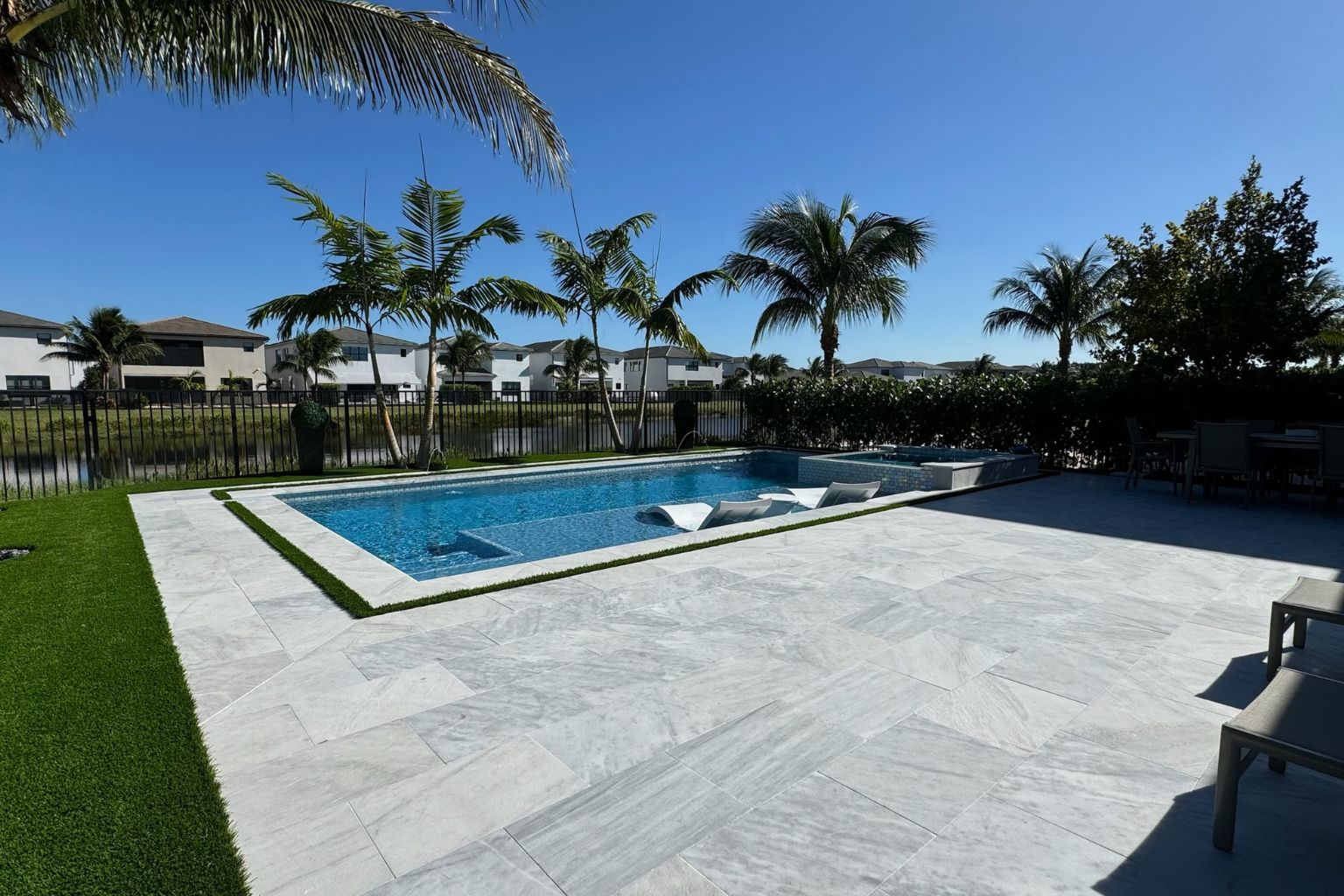
A Baja shelf is a wide, shallow platform built into a pool for sitting, lounging, and play. The industry standard for residential in-ground pools defines this feature carefully, capping the water depth at under 12 inches.
Exceeding that 12-inch mark turns the feature into an underwater bench under the standard guidelines. This guide covers where that measurement sits, how to choose a depth underneath it, and the design decisions that decide whether your new shelf works the way you pictured it.
What the Names Mean
Homeowners use several names for the same feature, as Baja shelf, sun shelf, tanning ledge, and lounge ledge all describe a shallow platform inside the pool. The Pool & Hot Tub Alliance standard for residential inground swimming pools offers specific guidance, and it separates three features that look similar but serve different purposes.
Sun Shelf
A sun shelf is an area of the pool adjoining the pool wall with a water depth of less than 12 inches, designed specifically for seating and play. This remains the feature most people picture when they talk about a Baja shelf.
Underwater Bench
An underwater bench provides a seat sitting a maximum of 20 inches below the waterline. Builders can recess this bench into the wall or place it inside the pool perimeter, and it can form part of your stairs, a beach entry, or another water feature.
Underwater Shelf
An underwater shelf serves as the broad category for these features. The standard permits these shelves at any size, shape, or design. They carry no minimum depth requirement and have a maximum depth of four feet. The standard names tanning shelves, in-pool tables, and bar stools among the primary examples.
The most useful distinction happens at the 12-inch mark. Under that depth, you have a sun shelf built for seating and play. Going deeper creates a bench, which offers a different experience for sitting, supervising children, and placing furniture.
Choosing a Depth
Two numbers govern this decision, and they align for different reasons.
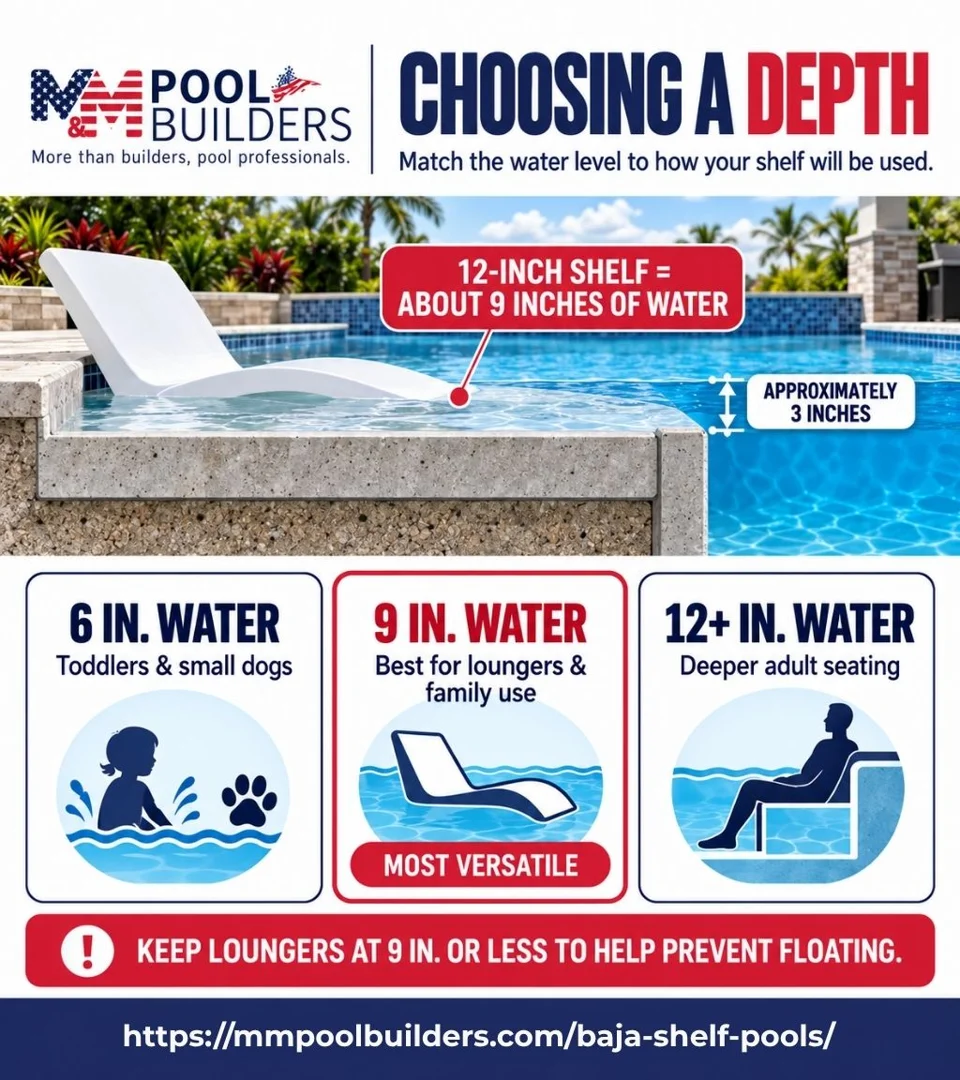
First, the water always sits below the shelf edge. Roughly three inches separate the surface of the water from the top of the shelf, so a shelf formed at 12 inches holds about nine inches of water. Depth conversations go wrong when one person means the structure and the other means the water.
Second, you must consider how furniture floats. In-pool loungers are designed to sit on the shelf with your weight in them. Past roughly nine inches of water, these chairs start to lift. That buoyancy provides the practical reason the standard’s 12-inch definition matches what furniture makers recommend.
With those two concepts established, the depth choice comes down to who uses the pool on a daily basis.
- Around six inches of water suits toddlers and small dogs. This shallow environment keeps everyone comfortable, and it doubles as a splash area on days when your family prefers a lighter swim.
- Around nine inches of water, resulting from a shelf formed at 12 inches, provides the most practical middle ground. Loungers stay firmly put, adults can comfortably sit and supervise, and children have a good place to play.
- Past 12 inches of water, the feature becomes a bench under the standard. This depth suits adults who want more submersion. Since furniture and small pets require shallower levels, this deeper design focuses on human seating.
The Shelf Can Serve as Your Entry
A shelf placed at the shallow end handles two jobs simultaneously.
The standard lists sun shelves among the recognized means of entry and exit, alongside steps, stairs, ladders, ramps, beach entries, and benches. A pool requires a designated means of entry and exit in the shallow area where water depth exceeds 24 inches at the shallowest point. Builders position this entry on the shallow side of any initial slope change.
That guideline gives you two configurations to discuss during the design phase.
A first step entry allows the shelf to sit at deck level, letting you step directly onto it. This creates a wide landing area in the shallowest water, providing the easiest access for children and older guests.
A second step entry features a standard step leading down to the shelf, placing the platform slightly deeper in the water. This approach makes the shelf feel like a defined zone inside the pool, which suits adults who want to use the space primarily for lounging.
Where the Return Inlets Go
Proper inlet placement decides how well a shelf circulates, and builders handle this detail during construction.
Shallow water moving across a flat surface naturally circulates slowly. The standard addresses this detail directly by requiring that variations such as tanning shelves account for the full circulation of the pool water.
It also requires inlets and outlets arranged to produce uniform circulation and keep sanitizer distributed evenly throughout the pool, and it sets a minimum of one return inlet per 300 square feet of water surface area.
For a sun shelf, builders calculate the number and aim of the return inlets serving it while laying the plumbing. Water needs a designated path to enter the shelf and another path to leave it. The angle of the fittings decides whether the water crosses the whole surface or circles just one corner.
Since moving an inlet requires opening up a finished shell, settling the circulation layout alongside the initial shell shape gives you the best outcome.
Finishes That Grip Without Abrading
The standard sets a requirement for surface textures that pull in two directions, which makes finish selection an important choice.
Surfaces inside the pool that provide footing for bathers must offer slip resistance. Those same surfaces cannot be rough enough to cause injury or act as an abrasion hazard in normal use. A shelf serves both purposes at once. People stand on it, requiring a solid grip. People also sit on it, lie on it, and let children play on it, requiring a comfortable texture.
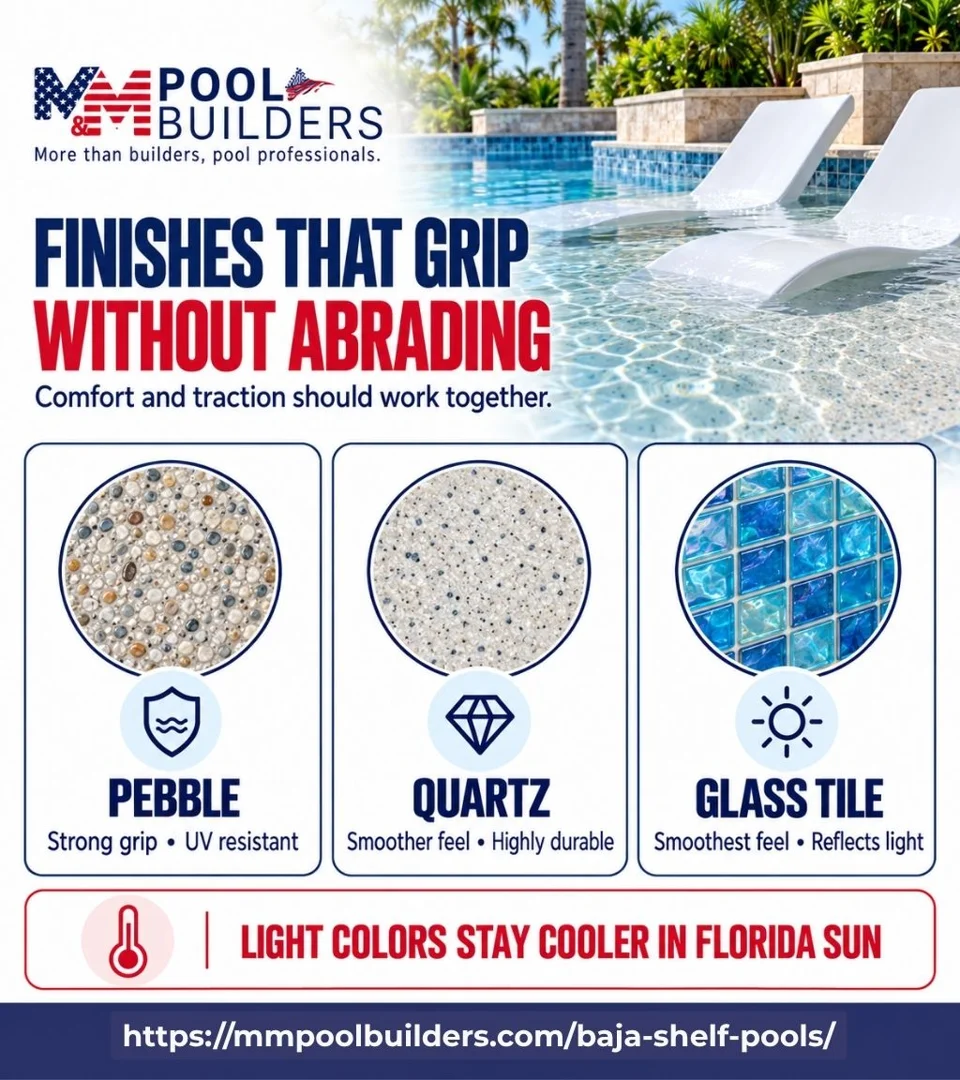
- Pebble finishes give strong texture and hold up against UV fading. That durability matters on a surface sitting in direct Florida sun all day.
- Quartz aggregate sits smoother underfoot while maintaining a high level of durability.
- Glass tile reflects light and offers the smoothest texture, which suits a shelf where people spend time sitting.
- Light colors in pale blues, whites, and grays absorb less heat. A dark finish on a south-facing shelf gets quite warm by midafternoon in July.
The best answer depends on how your family plans to use the shelf, which makes it a valuable part of the design conversation.
Features Worth Building In
Builders must form several additions directly into the shell, which makes it important to decide on them while designing the shelf.
- Umbrella sleeves let you drop an umbrella directly into the shelf, handling the strong afternoon sun in South Florida.
- Bubblers push water above the surface for a fountain effect. They suit shallower shelves, creating a splash-pad feel for children while adding soothing water sounds for everyone else. Our guide to custom water features covers the wider range of options.
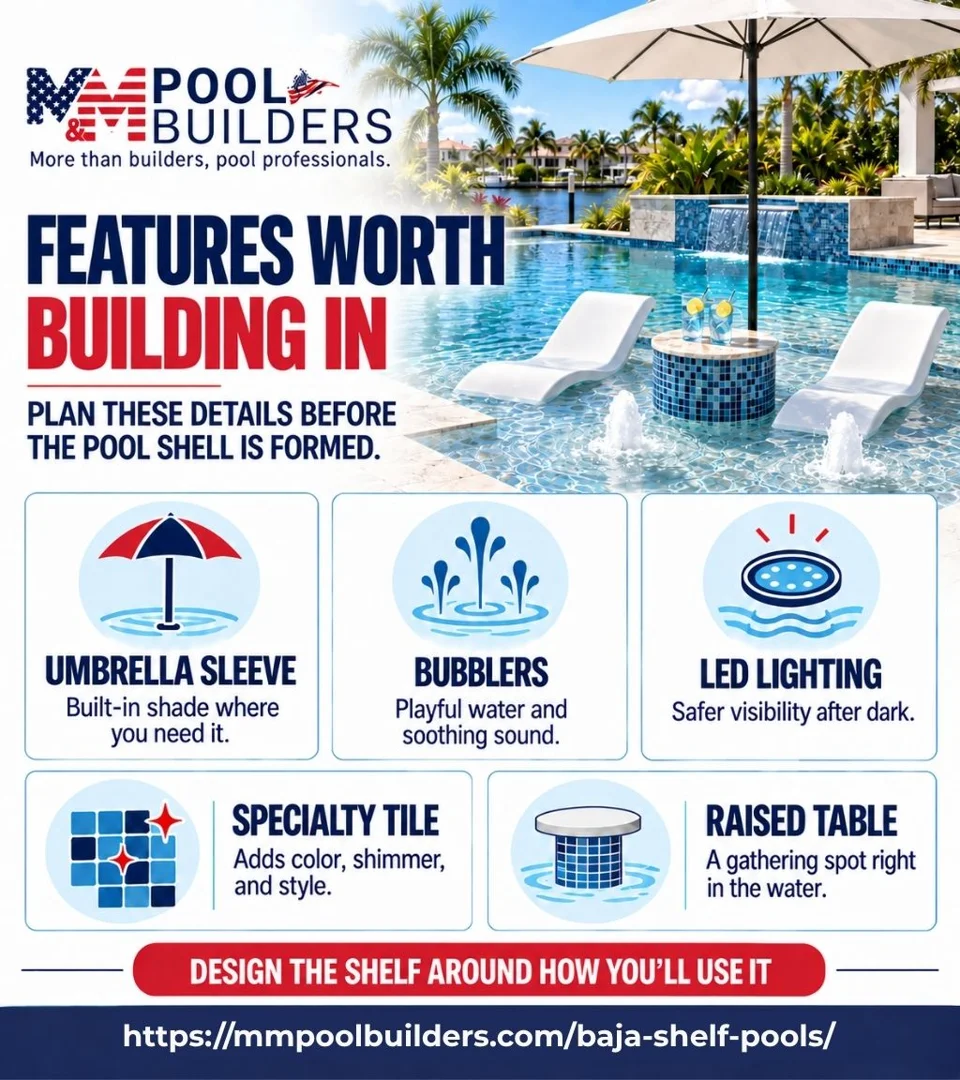
- LED lighting keeps the shelf visible after dark. Most well-designed shelves carry at least one dedicated light fixture.
- Specialty tile in glass or mosaic makes the shelf a focal point. By sitting close to the surface, this tile catches light in a way that deeper areas miss.
- A raised table turns the shelf into a place for people to gather, providing seating around it right in the water.
The Tradeoffs
A shelf earns its place in most pools, and three tradeoffs are worth weighing honestly.
First, the feature uses surface area. A shelf occupies space that would otherwise be swimming water, so your overall pool size and shape must account for it during the design phase. On a compact pool, resolving that spatial balance on paper gives you the best results.
Second, shallow water warms faster. In peak summer, a shallow shelf gets quite warm in the afternoon. Choosing light finishes and planning the orientation properly helps manage that temperature shift.
Third, the standard governs the wall below the shelf. The rules cap the slope of walls connecting shelves to the pool floor. This guideline shapes how the shelf meets the rest of the pool and determines the room required for a smooth transition.
Adding a Shelf to an Existing Concrete Pool
A custom concrete shell offers the best canvas for adding a new shelf. Builders tie new steel into the existing structure, form concrete around it, and match the finish to the rest of the pool. When done properly, the new shelf reads as part of the original design.
Three elements determine the final result. The first is the structural tie-in between the new and existing concrete, which is where construction quality shows.
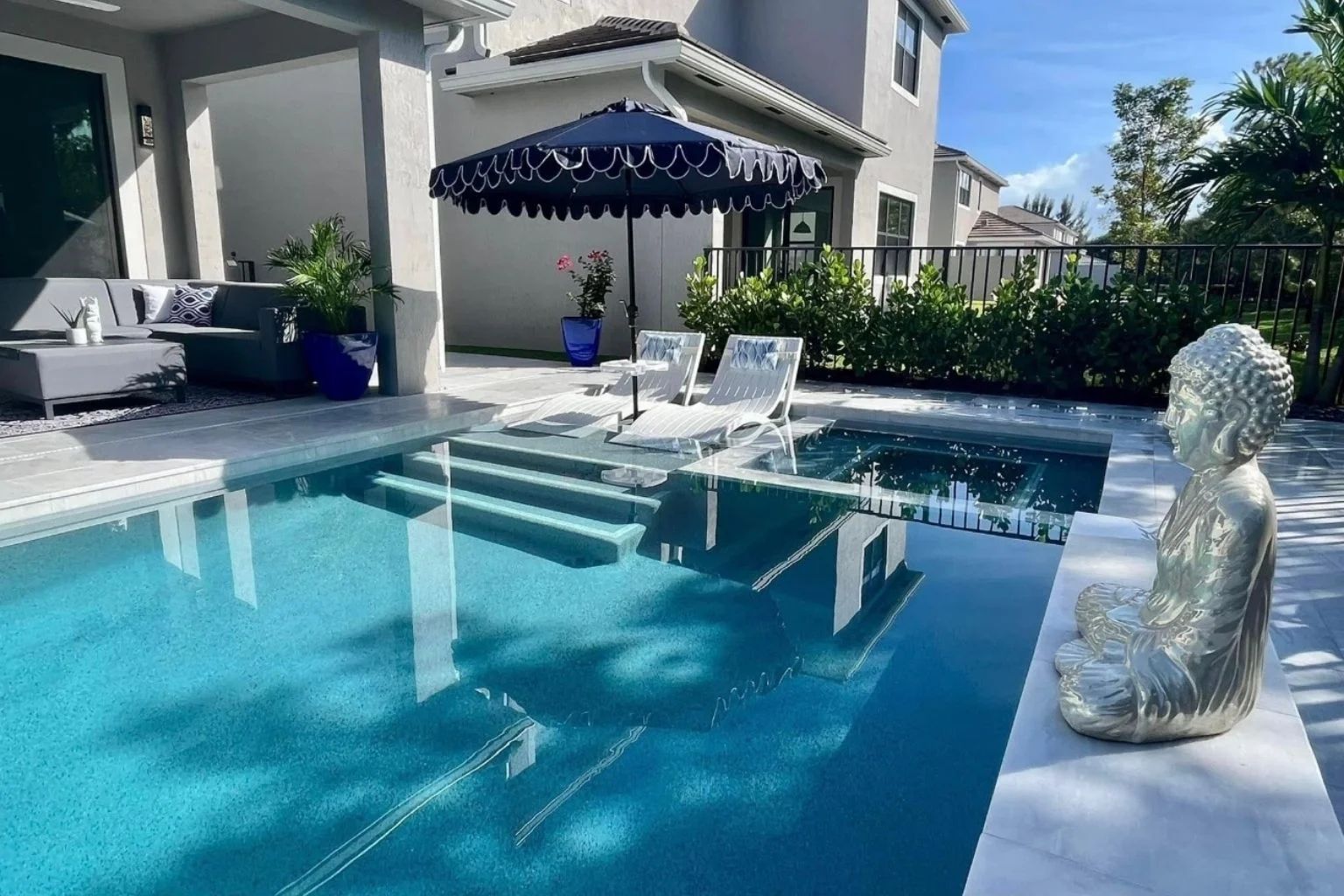
The second involves the finish match, which takes skill to blend with an older surface that has weathered over time. The third focuses on circulation, since a pool whose return inlets were laid out without a shelf in mind needs the plumbing addressed at the same time.
Adding a shelf works well as part of a broader pool remodeling project. Handling resurfacing, coping, and deck work all together gives a more cohesive result for your backyard.
Frequently Asked Questions
How Deep Should a Baja Shelf Be?
The water should sit under 12 inches deep, and a depth of around nine inches suits most households. That depth keeps in-pool furniture stable and matches how the industry standard defines a sun shelf.
What Is the Difference Between a Baja Shelf and a Tanning Ledge?
These terms carry the identical meaning. Baja shelf, sun shelf, tanning ledge, and lounge ledge all describe the same feature. The industry standard uses the term sun shelf.
Can a Baja Shelf Be the Only Way Into the Pool?
The standard recognizes sun shelves among the acceptable means of entry and exit. Your shelf can serve that role depending on your specific pool layout and the local requirements applying to your property.
Will In-Pool Furniture Float?
Past roughly nine inches of water, most furniture begins to float. That figure drives the depth recommendation for anyone planning to use loungers on the shelf.
Does a Shelf Work on a Small Pool?
It can, and the layout planning matters more. Since a shelf uses surface area, working out the proper proportions during the design phase keeps the swimming portion balanced.
Can a Shelf Be Added to a Pool That Already Exists?
You can add a shelf to a custom concrete pool. The process involves structural work tying new steel and concrete into the existing shell, along with matching the interior finish.
Start Planning Your Custom Backyard With M&M Pool Builders
M&M Pool Builders operates as a family-owned company in Boca Raton, designing and building custom concrete pools across Palm Beach County and beyond. Our team settles the shelf depth, entry configuration, return inlet placement, and finish selection all together, which is how the feature ends up working the way you pictured it. You can see finished shelves in our projects.
When you reach out, please tell us whether you want to build a new pool or remodel an existing one. Let us know who uses the pool most frequently and whether you plan to put furniture on the shelf. Those three answers help us recommend the right depth for your design right away.
Schedule a consultation to talk through your shelf.
Marcus Moreira
Marcus Moreira is the co-founder and driving force behind M&M Pool Builders, Boca Raton's trusted name in custom pool construction and luxury outdoor living. Alongside his partner Marina, Marcus has spent over 10 years delivering exceptional craftsmanship — from resort-style pools to summer kitchens and pergolas — all backed by a free 3D design consultation and a 10-week build promise. His hands-on, family-first approach has made M&M a top-rated contractor across South Florida.
Recent Articles
How to Design a Patio That Connects Your Pool, Kitchen, and Pergola
Artificial Turf vs. Natural Grass in South Florida: Installation Time & Quality Comparison