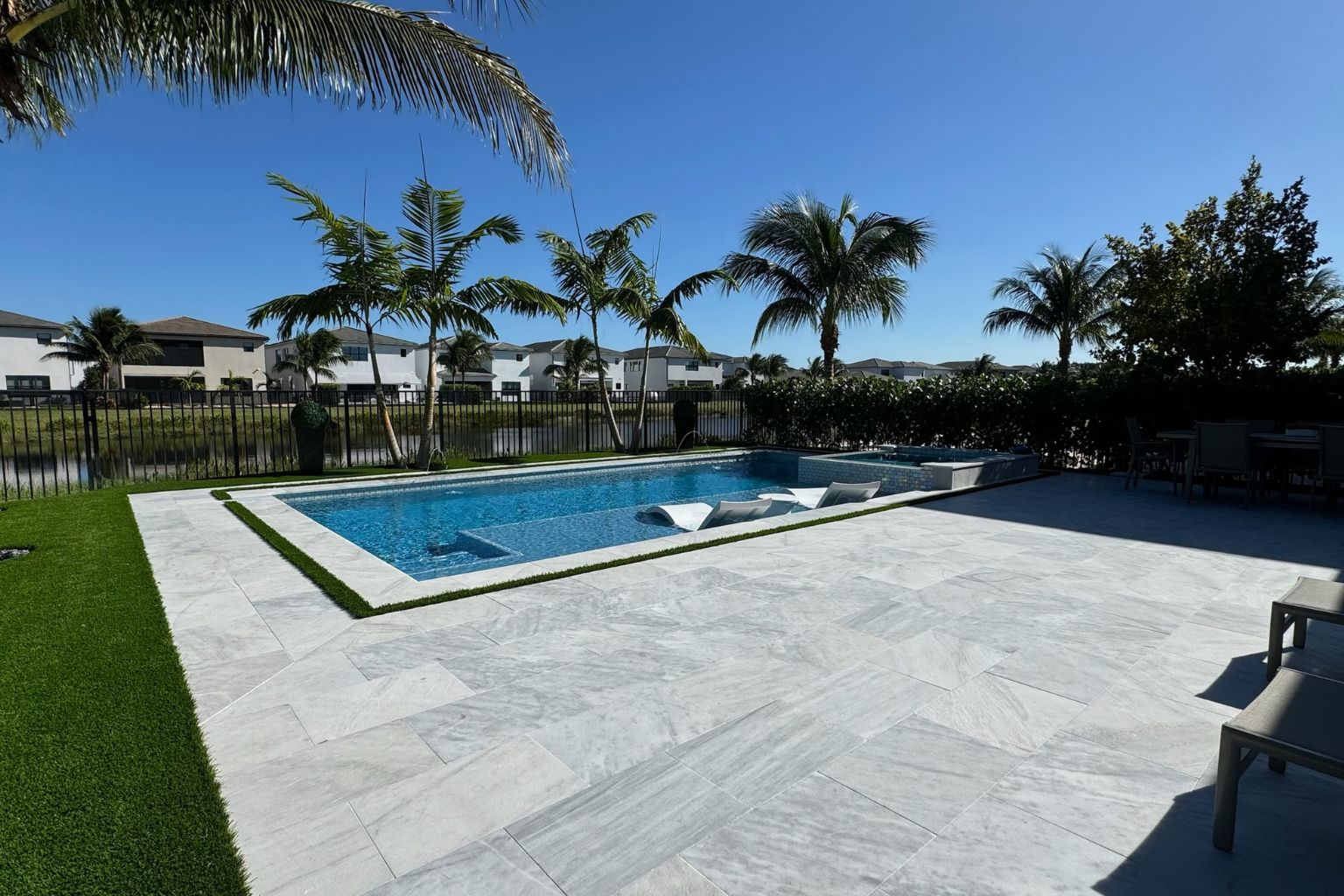
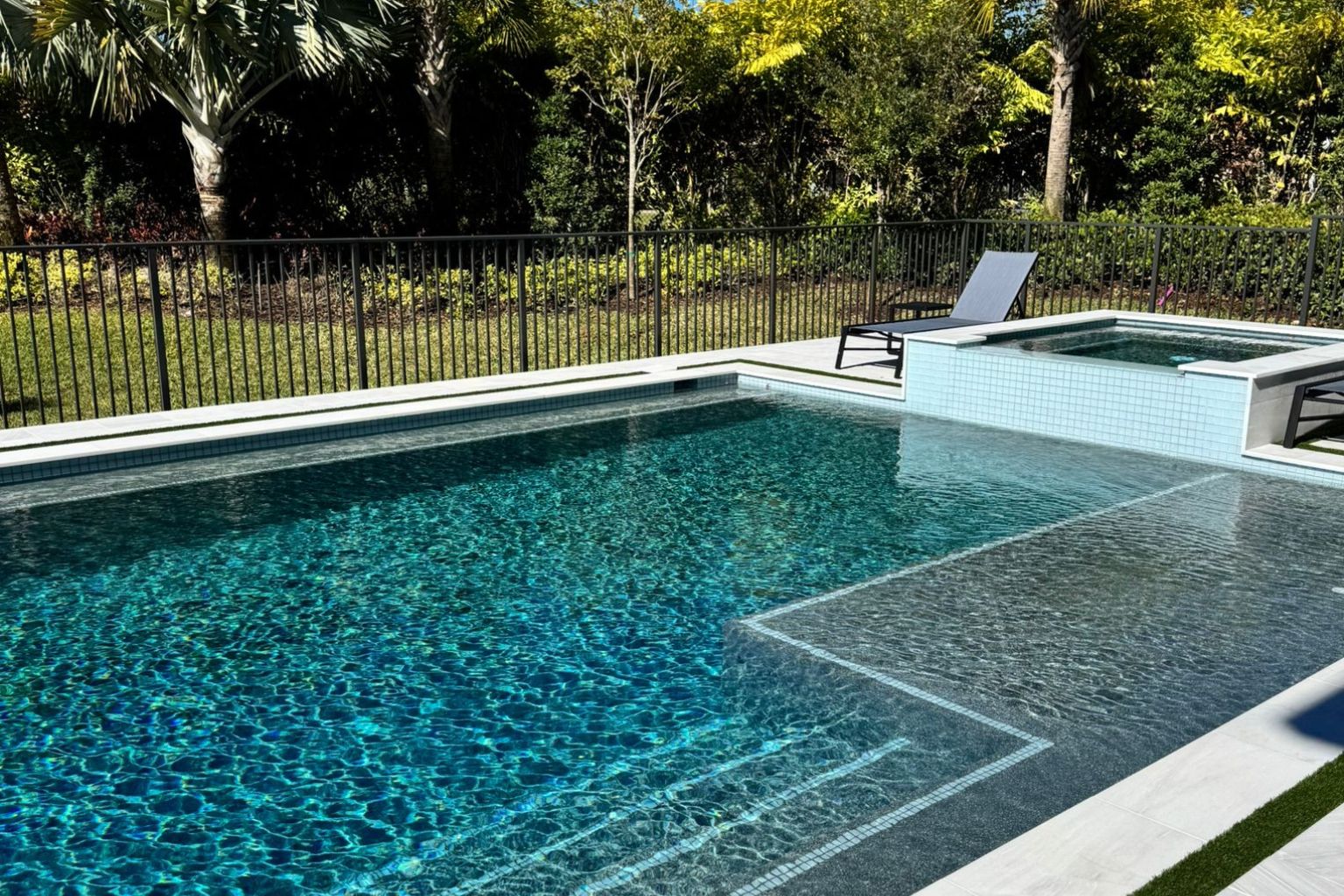
Why Invest in a Pool Heater in Florida?
Because cool evenings, windy waterfront lots, shaded backyards, and short winter cold snaps can turn a beautiful pool into something your family looks at instead of uses. If you want year-round swimming, warm water is not a luxury to think about later; it is an essential part of the plan.
From the first design conversation, the team of M&M Pool Builders looks at how you actually live outside, then helps you choose a heating solution that supports more comfort, more swim days, and more time together in your backyard.
Here’s a quick summary of the top benefits:
| Benefit | What It Means for You |
|---|---|
| Extended swim season | Swim comfortably through cooler fall, winter, and spring months |
| Year-round usability | Early morning laps, evening relaxation, spontaneous pool parties — any time |
| Lower energy costs | Heat pumps cost $50–$150/month vs. $200–$400+/month for gas in Florida |
| Health and wellness | Warm water supports muscle recovery, circulation, and low-impact exercise |
| Higher property value | A heated pool increases resale appeal in South Florida’s competitive market |
| Eco-friendly options | Solar heaters produce zero emissions and cost almost nothing to run |
Even in South Florida, water temperatures can dip into the low 60s°F on winter mornings, cold enough to empty a beautiful pool that should be the heart of your backyard. A heater solves that instantly.
But which heater is right for your pool? That’s where the real decision starts. Heat pumps, gas heaters, and solar systems each perform very differently in Florida’s climate, and the wrong choice can cost you thousands over the next decade.
This guide breaks down exactly how each system performs in Florida conditions, what it will actually cost you, and how to pair your heater with the right pool design for true year-round living.
What Are the Benefits of a Pool Heater in Florida?

A backyard pool is a great feature of any South Florida home, especially in waterfront havens like Boca Raton, Delray Beach, and Palm Beach. However, without a reliable heating source, even the most stunning custom concrete pool sits unused for nearly four to six months of the year. The primary benefits center on transforming your outdoor space from a seasonal luxury into a 365-day lifestyle hub.
In 2026, the trend in luxury outdoor living is all about seamless, multi-seasonal integration. Imagine stepping out of your heated, custom-designed freeform pool directly into an elegant, covered summer kitchen. Today’s forward-looking 2026 design trends focus on weather-resistant materials like marine-grade polymers and Dekton countertops that adapt beautifully to seasonal changes. When your pool water is consistently warm, your entire outdoor living area, from the swim-up bar to the custom fire pit, becomes a highly utilized extension of your home.
What Health, Wellness, and Lifestyle Benefits Does a Pool Heater Offer in Florida?
A heated pool is a powerful tool for health and wellness. Stepping into warm water promotes immediate muscle relaxation, dilates blood vessels to improve circulation, and provides therapeutic stress relief after a demanding day. For those who prioritize physical fitness, a heated pool allows you to maintain consistent, low-impact exercise routines year-round.
Instead of pausing your morning lap swimming during the cooler winter months, a reliable heating system ensures the water is always inviting. It turns your backyard into a private wellness sanctuary where children can play without catching a chill, and adults can unwind under the stars. Creating these effortless wellness spaces is at the heart of our Luxury Pool Design philosophy.
How Do Pool Heaters Maximize Long-Term Home Value?
Beyond personal enjoyment, investing in a pool heater is a smart financial move that boosts your property’s marketability. In competitive South Florida real estate markets, from Wellington down to Parkland, buyers expect high-end outdoor amenities.
A custom concrete pool featuring premium upgrades like infinity edges, integrated spas, and advanced heating systems commands a premium. It signals to buyers that the home is fully equipped for immediate, turn-key luxury. If you are looking to revitalize your current backyard to match these modern buyer expectations, a comprehensive Luxury Pool Remodeling project can seamlessly integrate these high-value features.
The Florida Showdown: Comparing Heat Pumps, Gas, and Solar Heaters
Choosing the right heater requires understanding how different technologies interact with South Florida’s unique climate. Let’s compare the three primary heating methods using Florida-specific market rates:
| Heating Method | Florida Upfront Cost | Florida Monthly Operating Cost | Average Lifespan | Heating Speed |
|---|---|---|---|---|
| Electric Heat Pump | $4,500 – $8,500 | $50 – $150 | 10 – 15 Years | Moderate (1–1.5°F / hour) |
| Gas Heater (LP/Natural) | $4,500 – $6,500 | $200 – $400+ | 5 – 10 Years | Fast (2–3°F / hour) |
| Solar Pool Heater | $3,000 – $8,000 | $0 – $10 | 15 – 20+ Years | Slow (Weather dependent) |
Heat Pumps vs. Gas Heaters: Sizing and Operating Costs for Florida Pools
For the vast majority of residential custom pools in South Florida, electric heat pumps are the undisputed champion. Unlike traditional heaters that generate heat by burning fuel, heat pumps work like an air conditioner in reverse. They extract heat from the warm, humid ambient Florida air and transfer it directly into your pool water. This process is incredibly efficient, often achieving a Coefficient of Performance (COP) of 5.0 or higher.
In Florida, a heat pump typically costs between $50 and $150 per month to maintain a stable, comfortable temperature. In contrast, traditional gas heaters can easily cost $200 to $400+ monthly (and up to $600 if used daily) due to the high cost of liquid propane or natural gas in South Florida. Over a 10-year period, switching from a gas heater to an electric heat pump can save a Florida homeowner up to $36,000 in operating costs.
Reflecting these local rates, gas heaters do have one major advantage: speed. A gas heater can raise pool temperatures rapidly—making it the ideal choice for heating an attached spa quickly or warming up a pool at a vacation home for weekend-only use. For everyday, year-round swimming, heat pumps deliver the best balance of reliability and long-term savings during our Pool Construction phase.
Solar Pool Heating: Leveraging the Sunshine State’s Natural Energy
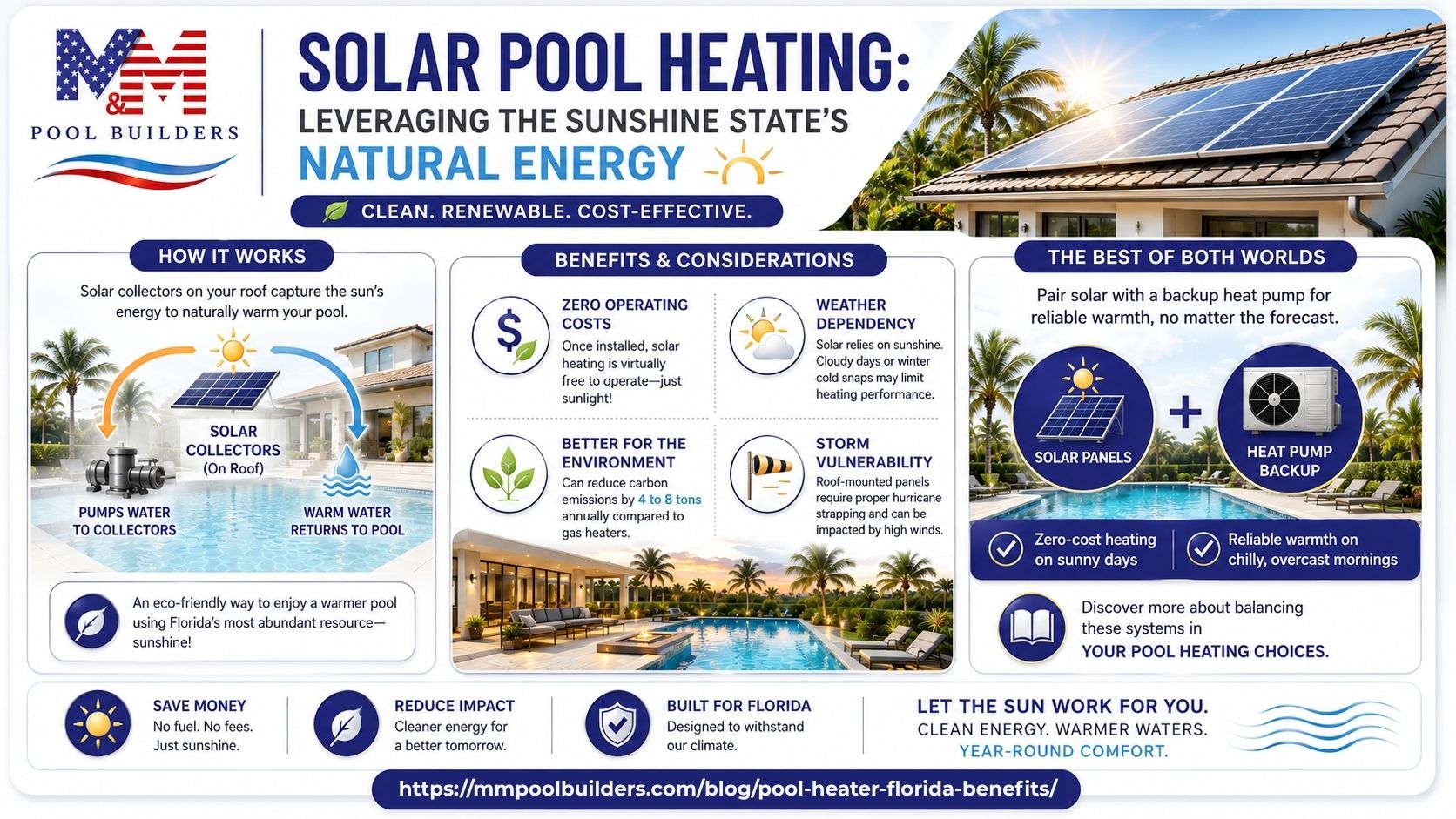
Solar pool heaters are an eco-friendly alternative that leverages Florida’s most abundant resource: sunshine. These systems pump pool water up to roof-mounted solar collectors, where the sun warms the water naturally before it flows back into the pool.
- Zero Operating Costs: Aside from the minor electrical cost of running your filtration pump, solar heating is entirely free to operate.
- Environmental Impact: A typical solar pool heating system can reduce carbon emissions by 4 to 8 tons annually compared to gas heaters.
- Weather Dependency: The main drawback is that solar is entirely dependent on sunlight. During consecutive cloudy days or winter cold snaps, solar alone may not keep the water at your desired temperature.
- Storm Vulnerability: Roof-mounted panels require proper hurricane strapping and can be vulnerable to high winds during Florida’s storm season.
To get the best of both worlds, many homeowners choose a hybrid heating system. By pairing solar panels with a smaller backup heat pump, you can enjoy zero-cost heating on sunny days while ensuring a warm pool during chilly, overcast winter mornings. Discover more about balancing these systems in Your Pool Heating Choices.
How Do You Choose the Right Pool Heater for Your Pool Size, Budget, and Cover?
Sizing your pool heater correctly is critical to avoiding high energy bills and premature equipment wear. Sizing calculations must factor in the pool’s total volume, surface area, wind exposure, and whether the pool is protected by a screen enclosure.
To maximize heating efficiency, pair your heater with a high-quality pool cover. According to the U.S. Department of Energy, evaporation is the biggest source of pool heat loss, and covering the water when it is not in use can significantly reduce heating costs. A cover also helps conserve water, reduce chemical use, and keep the pool cleaner, making year-round comfort easier and more affordable in Florida. Learn more from Energy.gov.
For more technical details on equipment sizing, visit our FAQ page.
Seamless Integration: Permitting, HOA Approvals, and Professional Installation
Installing a pool heating system in South Florida is not a simple DIY project. It requires navigating strict local permitting processes, such as those in Boca Raton and Palm Beach County, and securing necessary HOA approvals.
At M&M Pool Builders, we take a Caregiver approach to every project. We manage the entire stress-free, design-to-completion process, eliminating the need for you to coordinate with multiple subcontractors. Our transparent construction timeline takes as little as 10 weeks and takes you smoothly from initial 3D design to excavation, plumbing, and final plastering.
By trusting our team, you protect your investment and guarantee your system operates flawlessly for its entire lifespan. Learn more about Our Process and how we handle every detail with care.
Ready to Enjoy Your Warm Pool?
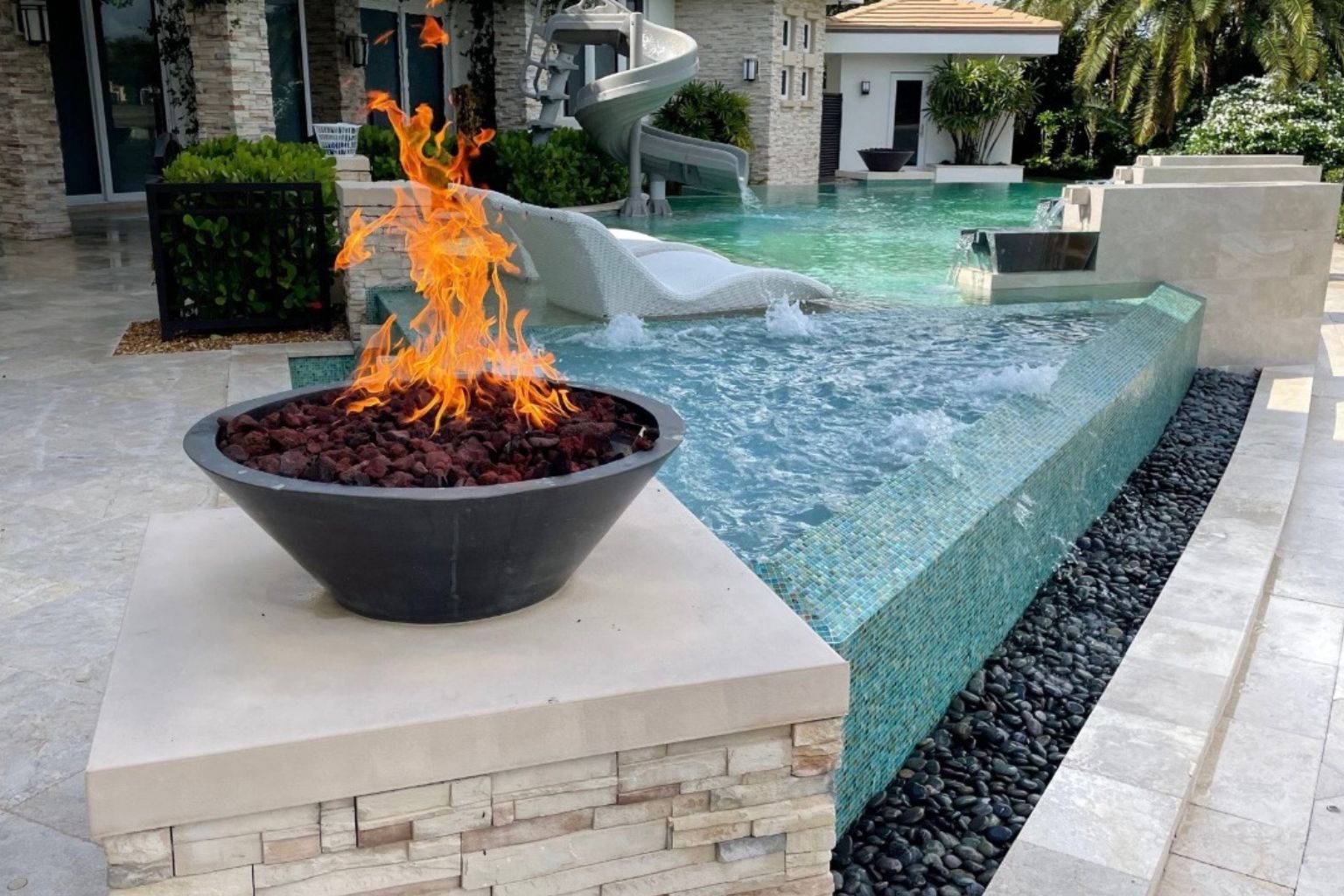
Ready to enjoy the benefits of a pool heater in Florida: warmer mornings, longer swim seasons, and more family time outside? Whether you are building a custom concrete pool or upgrading with an efficient hybrid system. Schedule your consultation today and start swimming year-round.
Marcus Moreira
Marcus Moreira is the co-founder and driving force behind M&M Pool Builders, Boca Raton's trusted name in custom pool construction and luxury outdoor living. Alongside his partner Marina, Marcus has spent over 10 years delivering exceptional craftsmanship — from resort-style pools to summer kitchens and pergolas — all backed by a free 3D design consultation and a 10-week build promise. His hands-on, family-first approach has made M&M a top-rated contractor across South Florida.
Recent Articles
How to Design a Patio That Connects Your Pool, Kitchen, and Pergola
Artificial Turf vs. Natural Grass in South Florida: Installation Time & Quality Comparison