Why Does a South Florida Pool Build Take 10 Weeks When the Backyard Looks Ready Today?
Because permits, HOA approvals, engineering, inspections, weather, and curing time all have to line up. And if one step is missed, your timeline can stretch fast. You need a clear plan before construction starts.
M&M Pool Builders can assist with that. We guide you through the moving pieces, explain what is happening each week, and keep the process focused so your custom pool moves from idea to swim-ready with fewer surprises.
| Phase | Typical Duration |
|---|---|
| Design consultation & contract | 1 week |
| Permitting (South Florida) | 2 weeks |
| Excavation & shell construction | 1 week |
| Plumbing, electrical & decking | 3 weeks |
| Interior finishes & equipment | 1 week |
| Soft startup & chemical balancing | 2 weeks |
| Total: contract to swimming | 10 weeks |
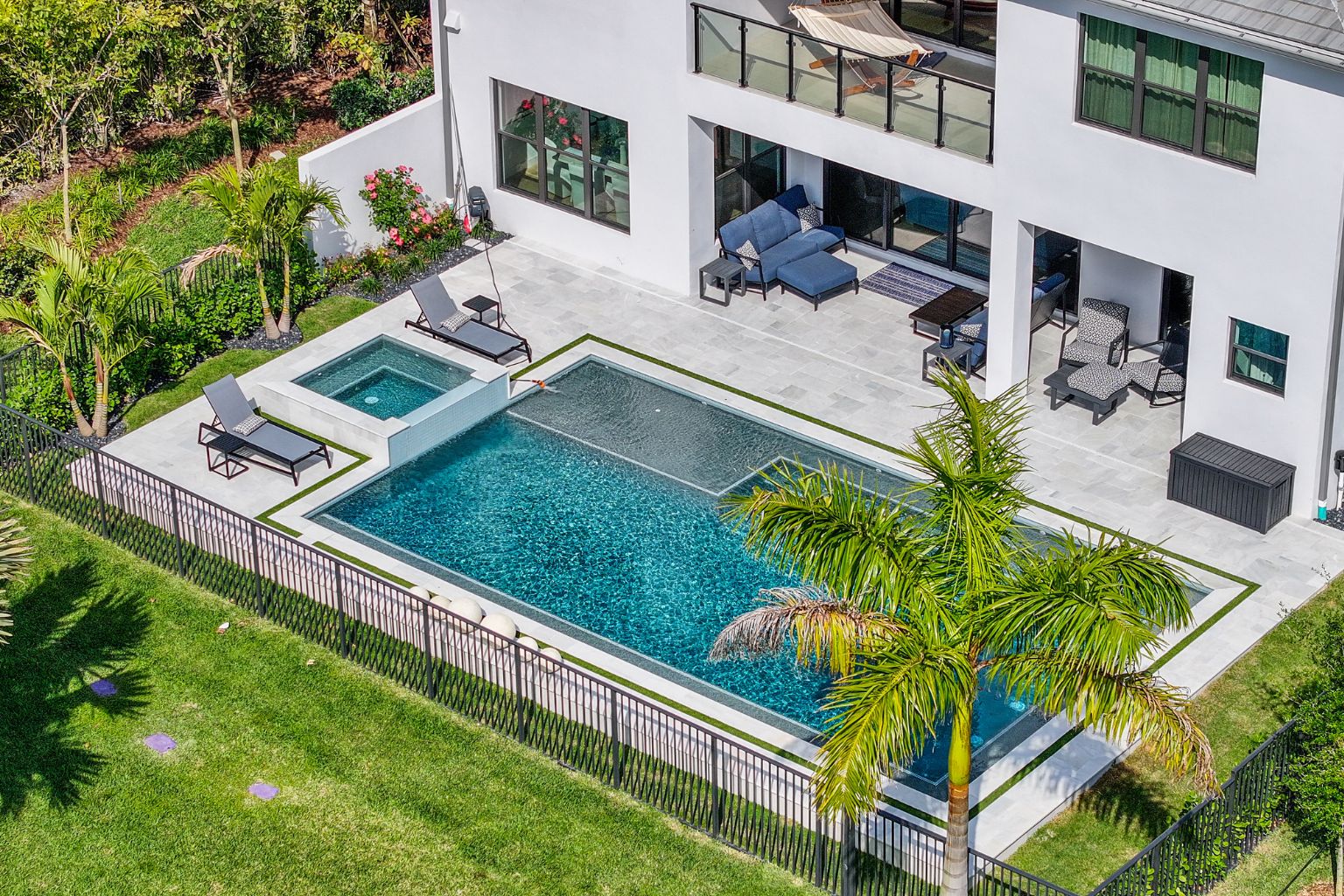
For most custom concrete pools in South Florida, the kind with integrated spas, infinity edges, and summer kitchens, 10 weeks from contract to swimming is the target timeline when approvals, inspections, weather, and material selections stay on track.
The single biggest surprise for most homeowners? It’s not the digging or the concrete. It’s the waiting before the first shovel hits the ground.
South Florida has some of the most layered permitting environments in the country. Palm Beach County, Broward County, and Miami-Dade each run their own review queues. Add an HOA architectural review on top of that, and pre-construction still needs to be managed carefully so the overall pool construction timeline stays within the 10-week plan.
That’s not a flaw in the process, it’s the reality of building a permanent structure in a region with a high water table, hurricane exposure, and strict Florida Building Code requirements. At M&M Pool Builders, we’ve spent over a decade navigating exactly this process for Boca Raton homeowners, and we believe that understanding why each week exists makes the wait far less frustrating.
This guide walks you through what actually happens each week, from permit submission to pool school, so you can plan with confidence and avoid the surprises that derail most projects.
Before a single piece of earthmoving equipment arrives at a home in West Palm Beach or Parkland, a mountain of engineering work must be completed. A custom concrete pool is not just a hole in the ground filled with water; it is a highly engineered, heavy concrete vessel designed to withstand intense hydrostatic pressure from Florida’s high water table.
Designing a pool that perfectly matches a home’s architecture requires a careful blend of art and engineering. Homeowners beginning this journey should explore options for Luxury Pool Design to see how custom water shapes, integrated spas, and adjacent summer kitchens are plotted onto a property’s unique footprint.
Every custom concrete pool must comply with the strict Florida Building Code. Because South Florida is prone to tropical storms and hurricanes, the engineering plans must account for wind loads, soil compaction, and precise deck elevations.
The high water table in coastal areas like Delray Beach and Ocean Ridge means that structural calculations must be flawless to prevent the empty concrete shell from literally popping out of the ground. Understanding Our Process helps homeowners see how these critical engineering steps lay the groundwork for a successful build.
Demystifying South Florida Permitting and HOA Approvals
The permitting process is often the most important variable in the pool construction timeline. In a well-coordinated 10-week plan, permitting and HOA approvals are handled early so the construction team can move from paperwork to site work without unnecessary downtime.
For homeowners in communities like Wellington, Jupiter, or Parkland, the first hurdle is obtaining Homeowners Association (HOA) architectural review approval. M&M Pool Builders helps organize the required documentation so HOA review, engineering, and municipal submission can fit into the overall 10-week schedule whenever the approval process stays on track.
City and county permits in Palm Beach County and Broward County require reviews from multiple departments, including zoning, structural, electrical, plumbing, and environmental. If a property is located in a historic district or near protected environmental areas, additional reviews for tree preservation and coastal construction lines are triggered. Navigating these requirements without an experienced partner is one of the most common Hiring Pool Builder Mistakes that can stall a project.
Why Does the Pre-Construction Phase Dictate Your Pool Construction Timeline in Florida?
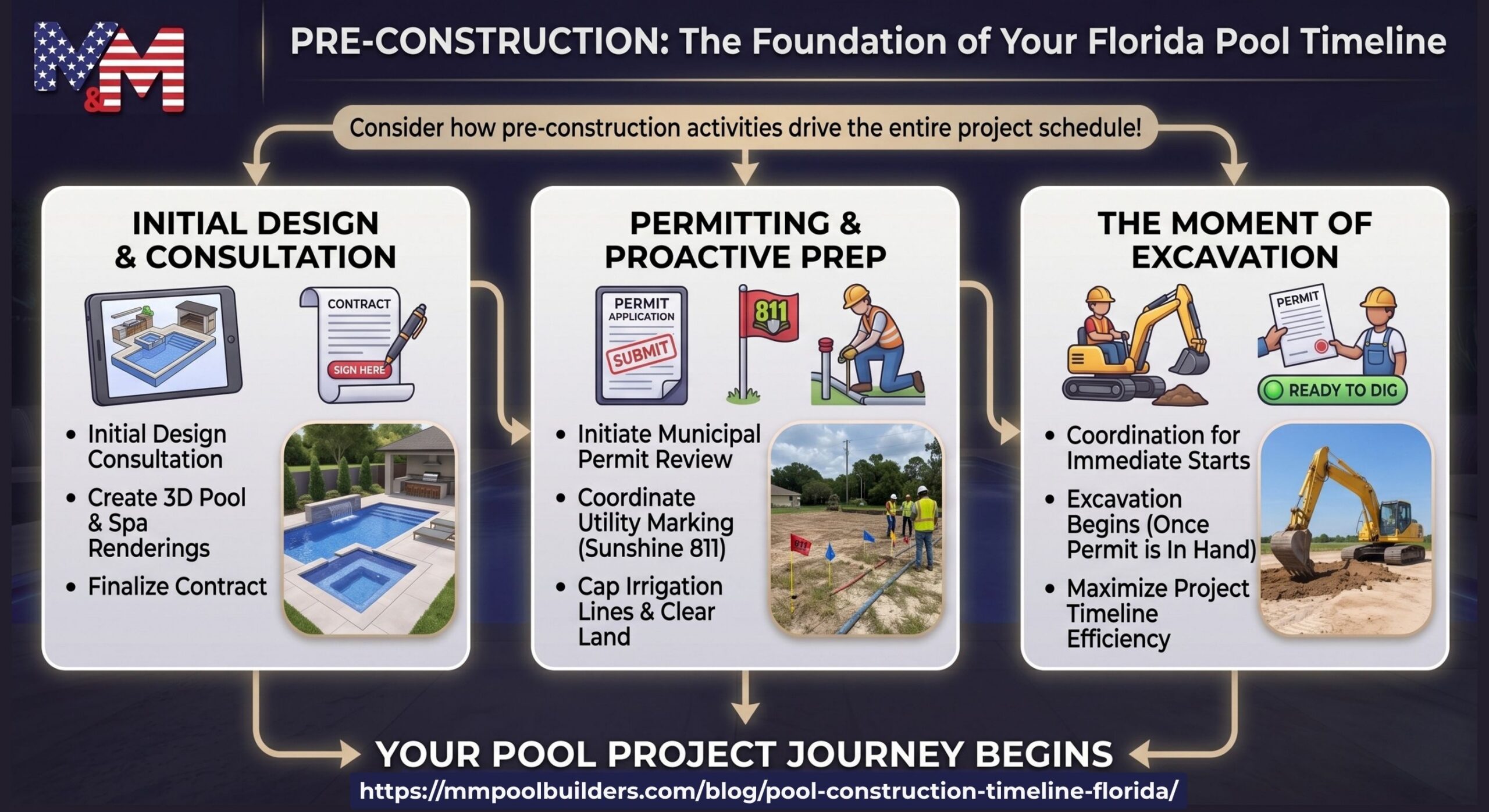
The pre-construction phase is the foundation of the entire project timeline. This phase begins with the initial design consultation, where 3D renderings are created to show how the pool, integrated spa, and summer kitchen will look. Once the contract is signed, the administrative and site preparation work begins.
One of the first physical steps is capping existing irrigation lines and clearing the land of obstacles. Proactive builders coordinate utility marking (utilizing the Sunshine 811 system), site prep, and permit documentation early so excavation can begin as soon as the project is cleared to move forward within the 10-week construction plan.
What Happens Each Week During a Custom Concrete Pool Build?
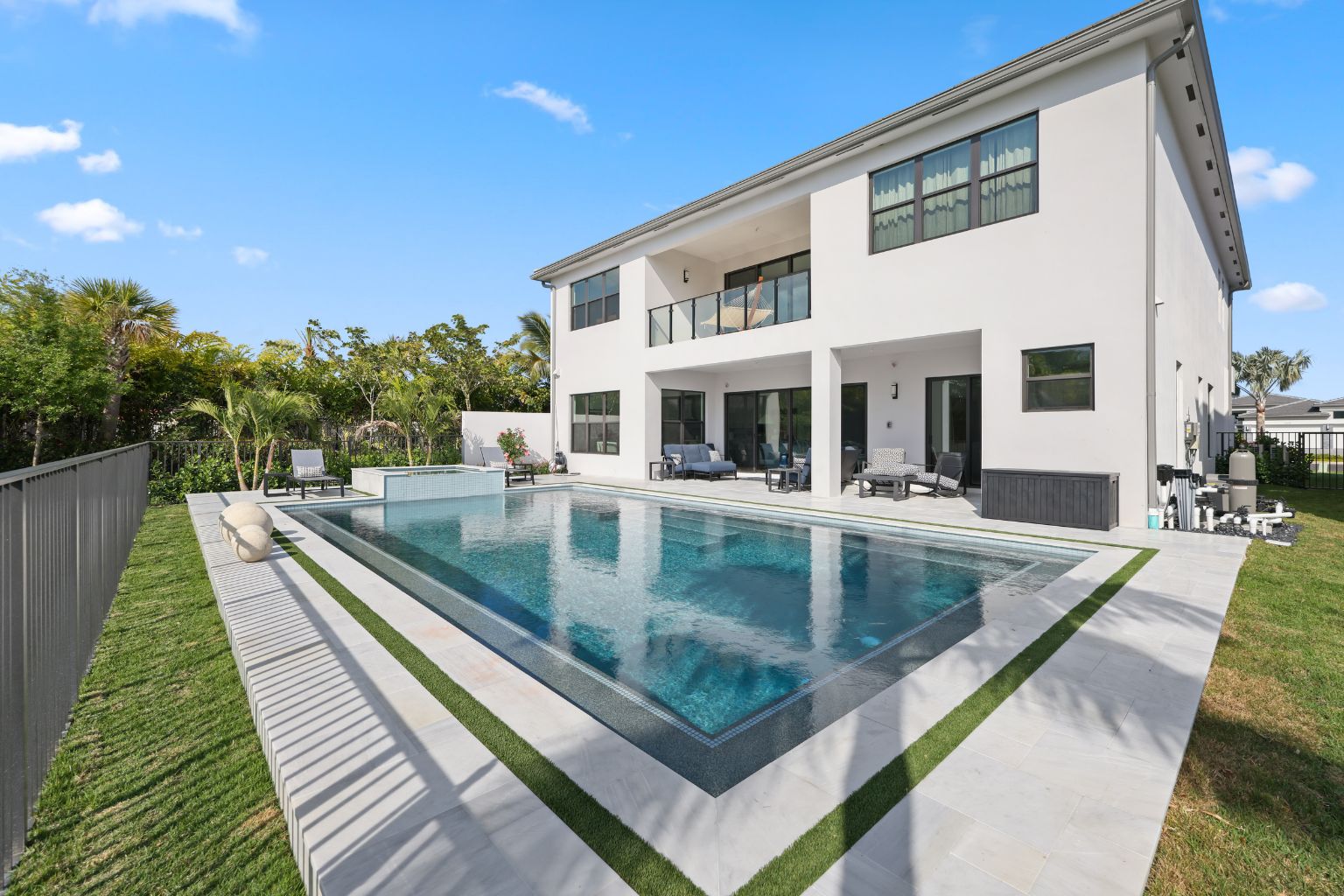
Once the local building department issues the permit, the backyard starts changing fast. For custom concrete pools, M&M Pool Builders uses high-strength concrete application methods and engineering details built for long-term durability. These plans must align with Florida code requirements and pool safety standards, including the International Swimming Pool and Spa Code.
Building a custom concrete pool allows for limitless design flexibility. Homeowners can incorporate high-end regional design features like custom summer kitchens, zero-entry margins, infinity edges, freeform rock waterfalls, and integrated spillover spas. To understand why these structural methods are superior to other construction methods, read about the importance of Quality Pool Construction.
Weeks 1 to 3: Excavation, Steel, and the Critical Gunite Curing Phase
The first three weeks of construction are loud, messy, and incredibly exciting. They begin with “Dig Day.” Heavy excavators move into the backyard to dig the pool’s shape, a process that typically takes 1 to 3 days depending on site accessibility in dense neighborhoods like Highland Beach or Boca Raton.
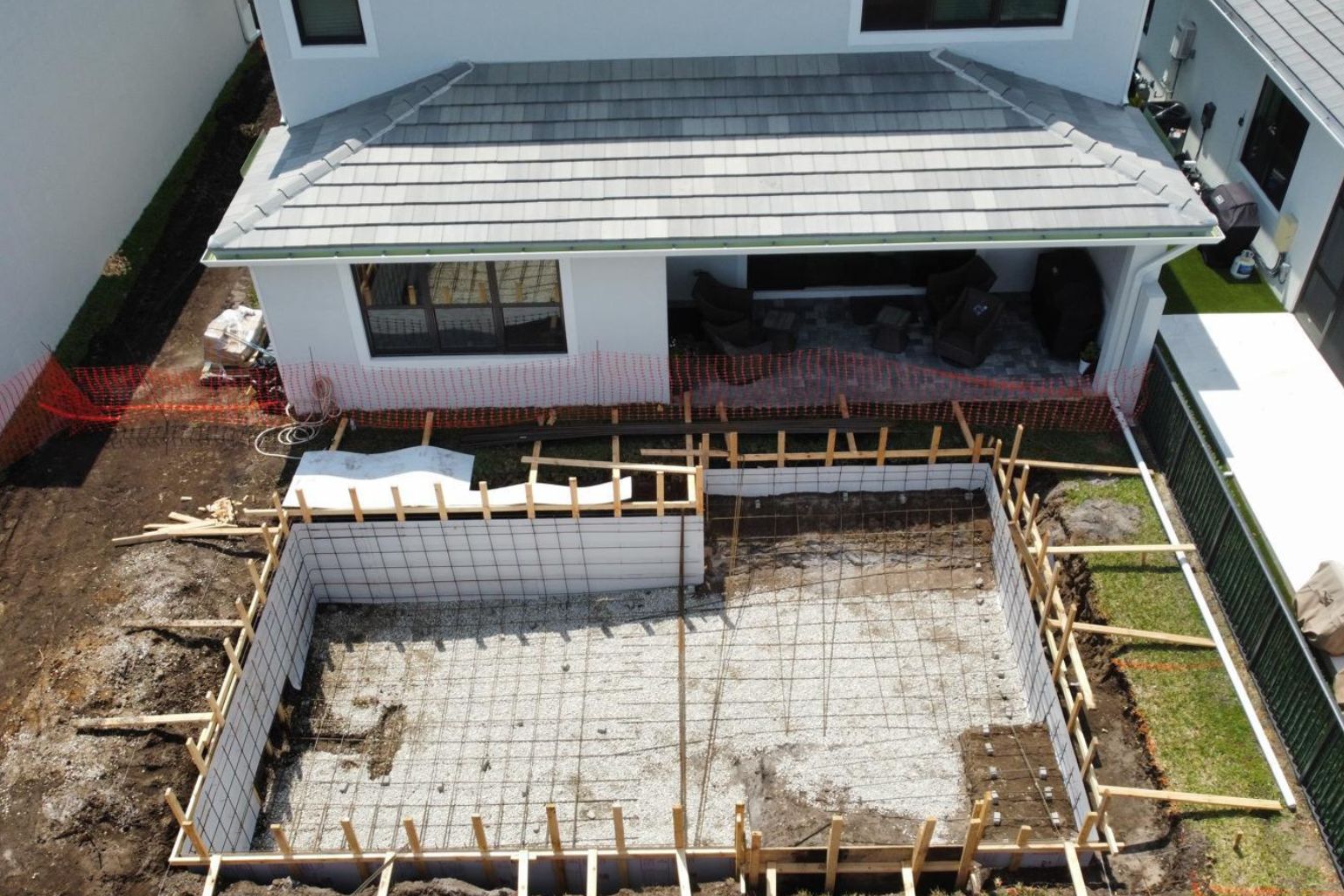
Immediately following excavation, crews install the steel rebar framing. This steel grid forms the skeleton of the pool, reinforcing the concrete shell against soil movement. Plumbing lines that run underneath the pool shell are pre-shaped and secured within the steel frame.
Once the steel and preliminary plumbing pass their first municipal structural inspections, the gunite or shotcrete is applied. This involves shooting a thick concrete mixture through a high-pressure hose onto the steel frame.
What follows is the most critical and often misunderstood phase of the build: the concrete curing process. The raw concrete shell must cure to achieve its structural integrity. The shell is kept damp during the early curing window, and the full cure continues in the background while other compatible site-prep work is coordinated to keep the 10-week timeline moving.
Weeks 4 to 7: Plumbing, Electrical, and South Florida Decking Features
With the concrete shell curing and the major structure in place, the focus shifts to the infrastructure surrounding the pool. Crews install heavy-duty Schedule 40 PVC plumbing lines, sizing them precisely to ensure optimal flow rates for water features and filtration systems. Because of South Florida’s high water table, hydrostatic relief valves and sump systems are integrated to manage groundwater pressure beneath the pool.
Next comes the electrical bond grid, a safety system that grounds all metal components around the pool to prevent electrical hazards. Once the plumbing and electrical rough-ins pass inspection, the backyard is backfilled and leveled.
This is the phase where the aesthetic features take shape. Craftsmen install artistic waterline tile and coping around the pool’s edge. Simultaneously, the pool deck is constructed. In South Florida, natural travertine pavers are the gold standard because they remain cool under the intense summer sun. If the project includes a covered summer kitchen, the structural framing and utility rough-ins for gas, water, and electricity are completed now. For tips on choosing a contractor who handles these complex steps seamlessly, read how to Find the Right Pool Builder.
Weeks 8 to 10: Interior Finishes, Safety Inspections, and the Soft Startup
The final weeks of the pool construction bring the project to life. The interior of the concrete shell is coated with a premium finish, such as a durable pebble aggregate or smooth plaster. Applying the interior finish takes just a day, but it must be immediately followed by filling the pool with water to prevent the plaster from cracking.
Before the pool can be legally filled and operated, it must pass a strict safety barrier compliance inspection. Florida law requires residential pools to have approved safety features, such as a pool safety fence, self-closing gates, or alarms on all doors and windows leading to the pool area.
Once final inspections are passed and the pool is filled, the “soft startup” phase begins. During startup, the new plaster surface remains chemically active. A dedicated startup technician brushes the pool walls and carefully balances the water chemistry to prevent staining, scaling, or surface damage. Finally, the homeowner goes through “pool school,” a hands-on orientation to learn how to operate the filtration equipment, automation systems, and water features. When you are ready to begin this exciting journey, you can Schedule Consultation with our design team.
How to Streamline Your Pool Construction and Avoid Delays
Building a custom pool in South Florida is a major investment, and managing the timeline requires local expertise. Choosing a single-source contractor like M&M Pool Builders eliminates the headaches of coordinating multiple subcontractors for the pool, landscaping, and summer kitchen.
To minimize delays, homeowners should finalize all design decisions before the permit application is submitted. Mid-project change orders are the leading cause of construction delays, as they often require plan revisions and re-permitting through the city.
Additionally, timing your build can make a significant difference. Starting your project in the late fall or winter (November through February) offers distinct advantages. The weather is drier, reducing the risk of rain-soaked excavation sites, and building departments are often less backlogged than they are during the peak spring rush. If you must build during the summer rainy season or hurricane season (June through November), working with an experienced builder who understands storm prep and active water management is essential to keeping your 10-week project on track.
Ready to estimate your Florida pool build time and turn your backyard into a private resort? Explore M&M Pool Builders’ Pool Construction services or Contact Us and let our team of experts help you today.
Marcus Moreira
Marcus Moreira is the co-founder and driving force behind M&M Pool Builders, Boca Raton's trusted name in custom pool construction and luxury outdoor living. Alongside his partner Marina, Marcus has spent over 10 years delivering exceptional craftsmanship — from resort-style pools to summer kitchens and pergolas — all backed by a free 3D design consultation and a 10-week build promise. His hands-on, family-first approach has made M&M a top-rated contractor across South Florida.
Recent Articles
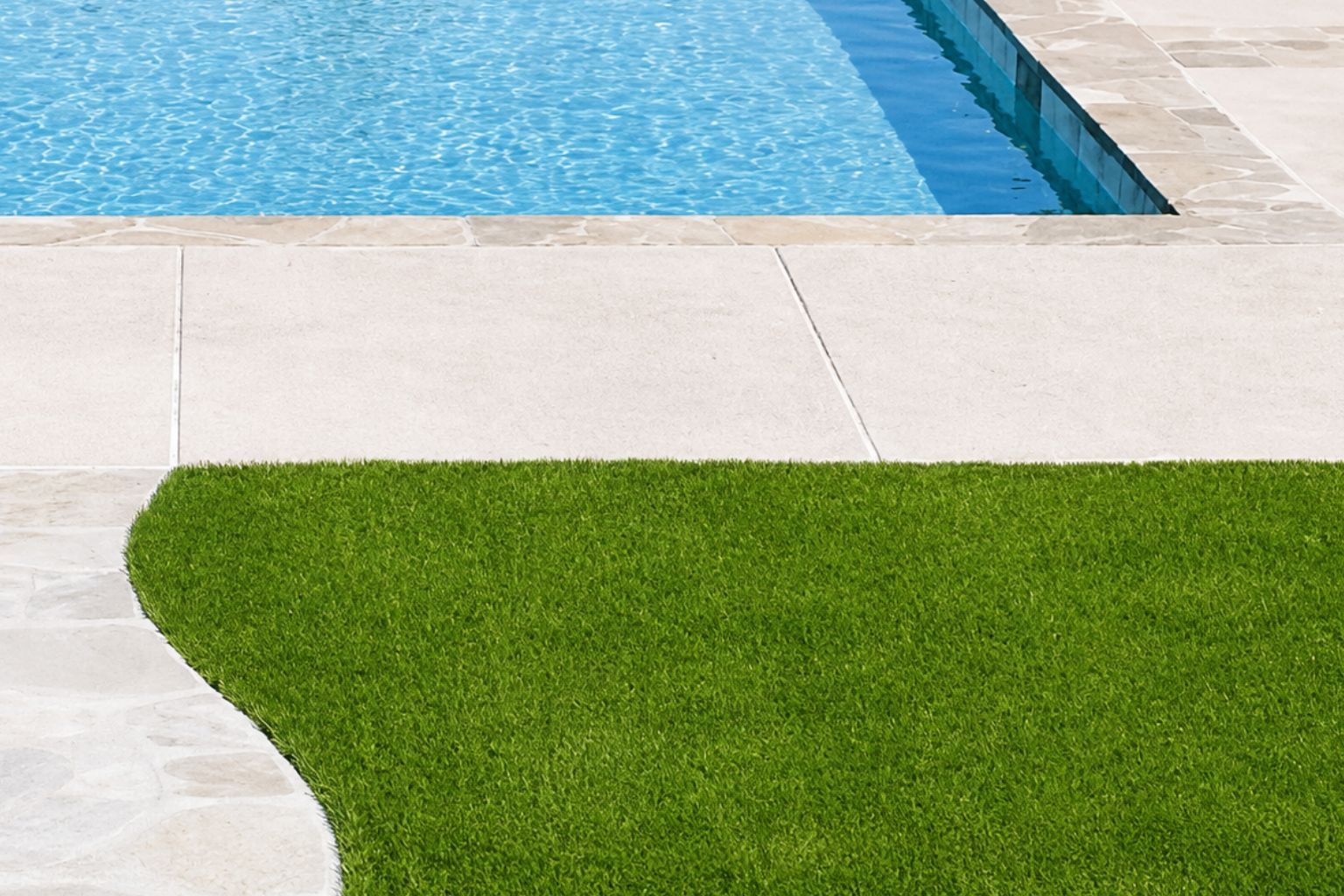
Artificial Turf vs. Natural Grass in South Florida: Installation Time, Maintenance, and Quality Comparison
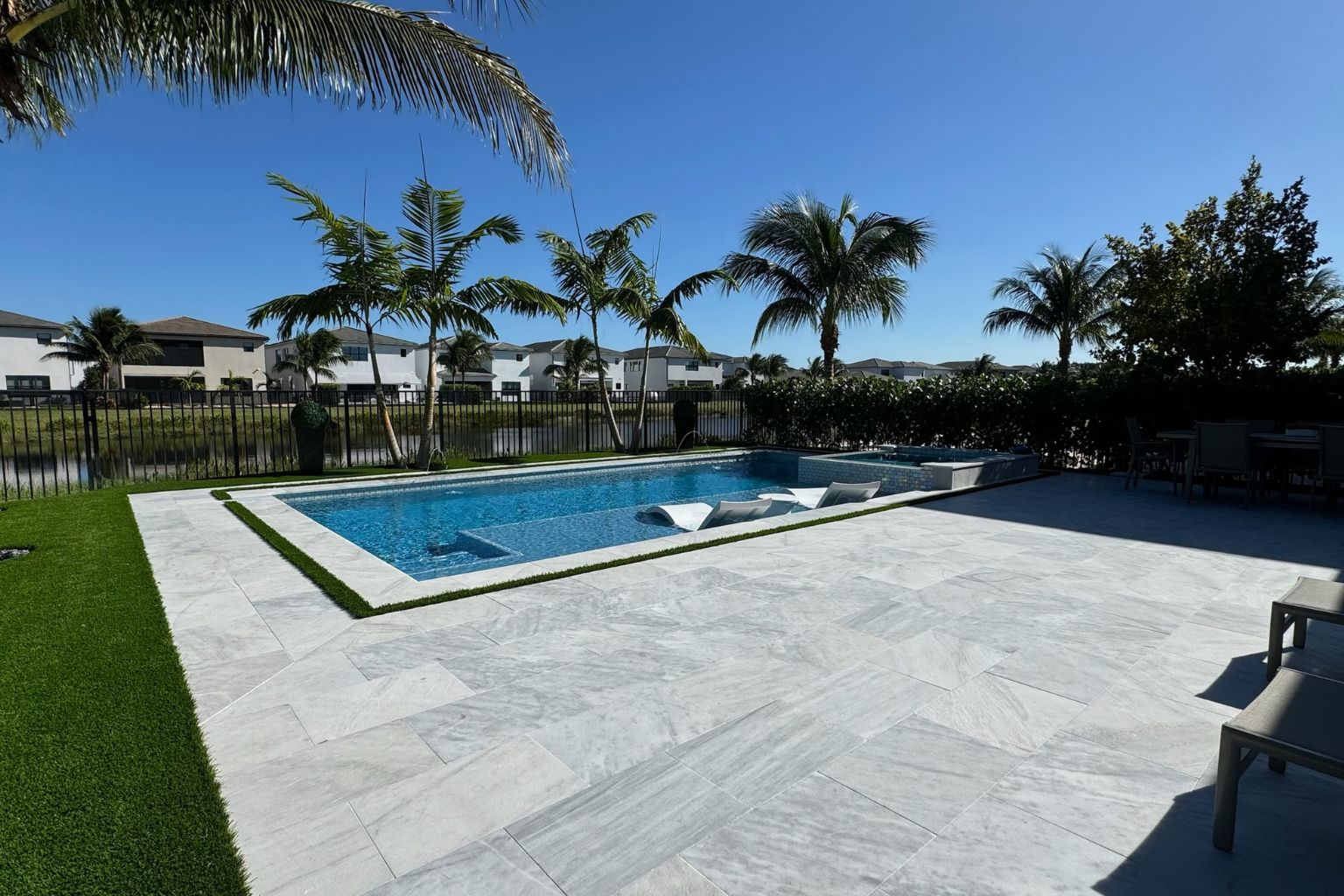
Marble vs. Porcelain Pavers for Your Pool Deck: Which Surface Stays Cooler?